
Quick Read
- Approximately 30,000 properties across Kent and Sussex, including 16,500 in East Grinstead, are experiencing water supply issues.
- A ‘major incident’ has been declared by Kent County Council due to the widespread disruption.
- South East Water (SEW) blames Storm Goretti, a power cut, and burst pipes from cold weather for the outages.
- Schools, libraries in East Grinstead, and the Queen Victoria Hospital have been affected, with some services moving online or relying on tankers.
- SEW CEO David Hinton faces calls for resignation following repeated outages and scrutiny over his evidence to MPs, as well as his £400k salary and £115k bonus.
Imagine waking up to no running water, day after day, for nearly a week. For tens of thousands of residents across Kent and Sussex, including a significant portion of East Grinstead, this has been a stark, unhygienic, and deeply frustrating reality. A situation described by one affected customer as ‘Armageddon’ has led to a major incident declaration, impacting 30,000 properties and shining a harsh spotlight on the performance of South East Water (SEW).
East Grinstead’s Unfolding Nightmare: A Community Paralyzed
The picturesque town of East Grinstead finds itself at the epicenter of this crisis, with an estimated 16,500 properties, nearly half of the total affected, grappling with either no water, intermittent supply, or critically low pressure. This isn’t merely an inconvenience; it’s a fundamental disruption to daily life, turning simple tasks into monumental challenges.
Krys O’Brien, an East Grinstead resident, shared her weekend ordeal with BBC Radio Sussex, describing it as ‘miserable.’ Her frustration was palpable, echoing the sentiments of many who received ‘very intermittent messages from South East Water on the website’ and were left in the dark about when normal services would resume. For families, the elderly, and those living alone, the lack of a reliable water supply quickly escalated from an annoyance to a genuine nightmare.
The impact has rippled beyond individual households, crippling essential services and local businesses. The Queen Victoria Hospital in East Grinstead, a crucial healthcare provider, has been forced to conduct some appointments virtually, relying on water tankers to maintain essential services. Public libraries in the town, along with several schools across Kent and Sussex, closed their doors on Monday due to the inability to provide basic sanitation and drinking water. Local businesses, too, have borne the brunt of the outage. Sarah Wilmot, a shop owner in East Grinstead, told the BBC she couldn’t open, while Matthew Turner from the Weald of Kent Golf Course and Hotel reported having to discard food and arrange for portable toilets for his customers. The economic and social toll is mounting, transforming a community into a landscape of scarcity and uncertainty.
Storm, System, and Scrutiny: The Roots of the Crisis
South East Water attributed the widespread disruption to a confluence of factors: the recent cold weather, which led to an ‘outbreak of leaks and burst water mains,’ a power cut at a pumping plant, and the impact of Storm Goretti. The storm, according to SEW, hampered the company’s ability to treat water at its usual rate. However, for many residents and officials, these explanations ring hollow, especially given SEW’s recent history of service failures.
Heather Pratt, a resident of Forest Row, dismissed Storm Goretti as a ‘very flimsy’ excuse. Her skepticism is rooted in recent memory; just weeks prior, in the run-up to Christmas, 24,000 customers in Kent and East Sussex, including areas like Tunbridge Wells, Pembury, Frant, and Eridge, were left without water for several days due to ‘water quality issues’ and a shutdown at a treatment center. The Drinking Water Inspectorate had previously criticized SEW for failing to make necessary infrastructure updates and conduct proper testing, describing the shutdown as ‘foreseen.’
This pattern of recurring outages has ignited a fierce debate about the accountability of privatized utility companies. Mike Martin, the Liberal Democrat MP for Tunbridge Wells, voiced his frustration to the BBC, stating that SEW needs to ‘get a grip’ and highlighting the ‘bizarre situation where we’ve privatised water and they are accountable to no-one.’ The scrutiny has intensified around David Hinton, SEW’s chief executive, who earns a base salary of £400,000 and received a bonus of £115,000 in 2025. Hinton had already been questioned by MPs regarding his handling of the December outage, with Alistair Carmichael, chairman of the Environment Food and Rural Affairs Committee, questioning the ‘accuracy and intent’ of Hinton’s evidence and calling his position ‘untenable.’ Calls for his resignation have grown louder amidst the latest crisis.
The Lifeline: Relief Efforts and Political Pressure
In response to the escalating crisis, Kent County Council leader Linden Kemkaran declared a ‘major incident,’ signaling the severity of the situation and the need for coordinated action. The local authority has been ‘putting additional arrangements in place to prepare for further potential disruption,’ acknowledging the precariousness of the situation.
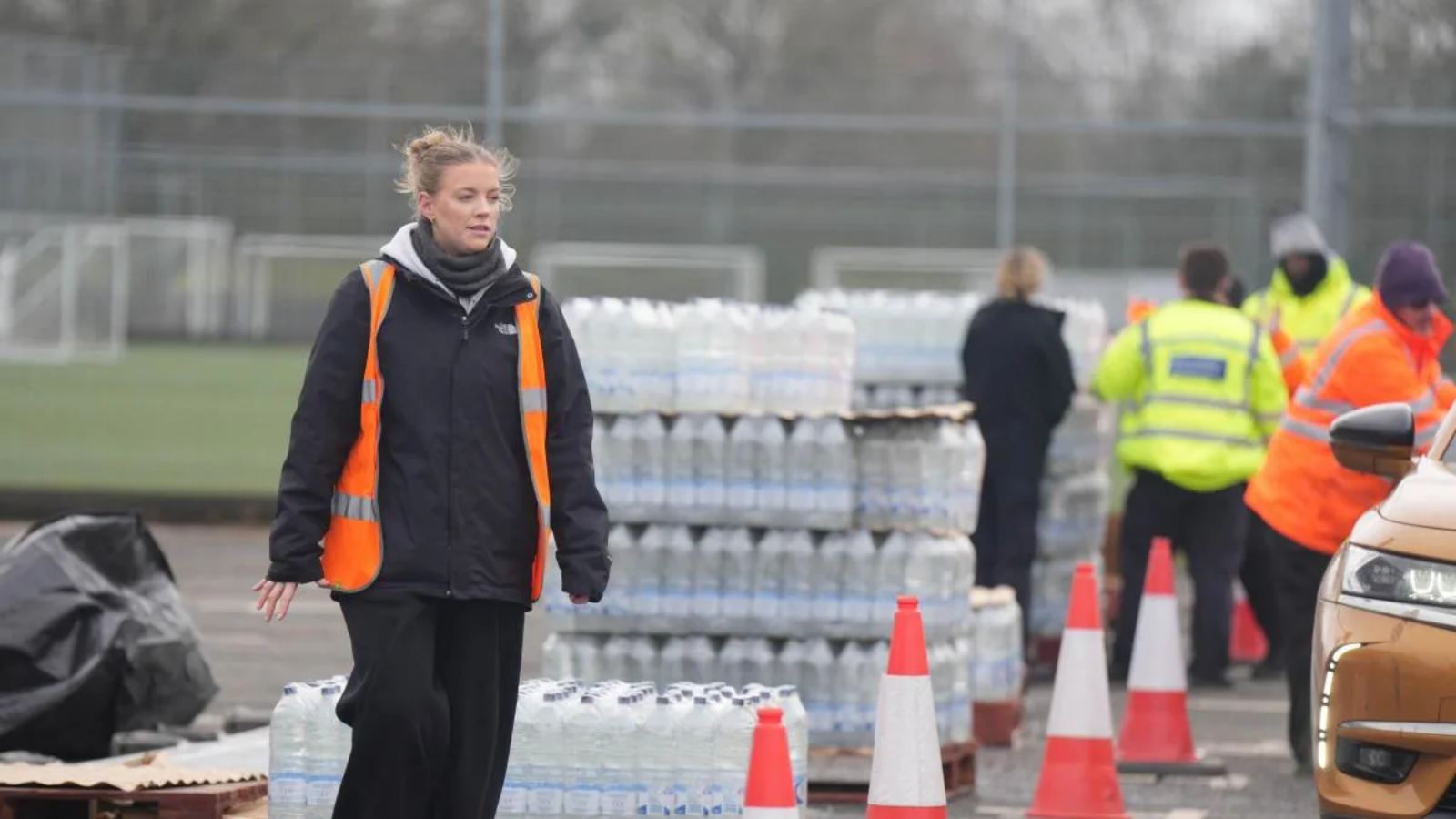
South East Water has mobilized resources to provide bottled water, prioritizing customers on its priority services register, as well as care homes, schools, and medical facilities. Tankers have been deployed to support hospitals, including the Queen Victoria Hospital in East Grinstead. Several bottled water stations have been established across the affected areas, with three specifically located in East Grinstead to serve the hard-hit community: the Kings Centre on Moat Road, the East Grinstead Sports Club on Saint Hill Road, and East Court on College Lane.
The government has also weighed in, with Water Minister Emma Hardy expressing her deep concern, calling the situation ‘entirely unacceptable.’ She confirmed that ministers were holding daily emergency meetings with South East Water and local officials, focused on restoring supplies quickly and prioritizing vulnerable customers. Hardy also noted that the government had increased compensation amounts for affected customers and businesses, a small measure of relief for those enduring significant hardship. The Prime Minister’s official spokesperson echoed these sentiments, labeling the issues ‘completely unacceptable’ and underscoring the high-level attention the crisis is receiving.
The ongoing water crisis in East Grinstead and wider Kent and Sussex is more than a mere inconvenience caused by adverse weather; it is a stark illustration of systemic vulnerabilities within privatized essential services. The repeated failures of South East Water, coupled with mounting criticism of its leadership and infrastructure investment, suggest a deeper problem of accountability and preparedness. While immediate relief efforts are crucial, the persistent nature of these outages, particularly against the backdrop of executive remuneration, demands a fundamental reassessment of how vital utilities are managed and regulated to ensure that basic human needs are not repeatedly compromised.